
Many think Steve Jobs was a “Visionary” who, some belief, also never made a mistake.
What if I told you that Steve’s first three computers each had major problems that discouraged mass-market acceptance? The Apple /// shipped with no operating system, the Macintosh shipped with limited memory, and the NeXT Computer was positioned incorrectly with major hardware limitations, and was priced more than twice what was promised at launch. Plus Steve, in the late 1990s before YouTube existed, wanted to do video editing, and not the iPod. He also didn’t want iTunes to go on Windows PCs.
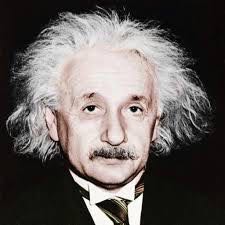
First, let there be no doubt that Apple’s PR machine was instructed to foster that myth. It was further emphasized with the Apple “Think Differently” campaign, emphasizing such “luminaries” as Albert Einstein, Bob Dylan, Martin Luther King, Jr., Richard Branson, John Lennon (with Yoko Ono), Buckminster Fuller, Thomas Edison, Muhammad Ali, Ted Turner, Maria Callas, Mahatma Gandhi, Amelia Earhart, Alfred Hitchcock, Martha Graham, Jim Henson (with Kermit the Frog), Frank Lloyd Wright, and Pablo Picasso.
Gandhi had a belief that civil, nonviolent obedience can bring about social change. He believed that because he had studied previous violent and nonviolent societal changes in terms of what works and what does not. Martin Luther King felt the same way, as did Nelson Mandela.
Einstein would come up with a theory and then tried to prove or disprove it. Edison would think of something that people might want to do, such as see at night, hear music when there was no band around, and so forth — over a hundred different inventions. He then set about conducting experiments to find the right technology and materials to do that thing. He did not have technology in search of a problem, as some in Silicon Valley sometimes promote.
Certainly, Steve had a pretty good idea of what the market might be like seven years in the future and how people wanted to really “do” things. But he also had some colossal failures: Apple ///, AppleTalk networking, Macintosh, NeXT, video editing instead of doing the iPod, no iTunes being on Windows, are just a few that come to mind. The myth of Steve Jobs, the “Visionary,” was the result of the company’s positioning statement that Mike Markkula wrote in the company’s early days, “We need to appear, in the face of competing with IBM, with their blue starched shirts, suits and ties (IBM’s dress code), as the two Steves running around in Birkenstocks with $100 bills falling out of their pockets”.
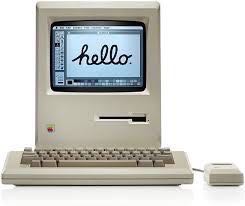
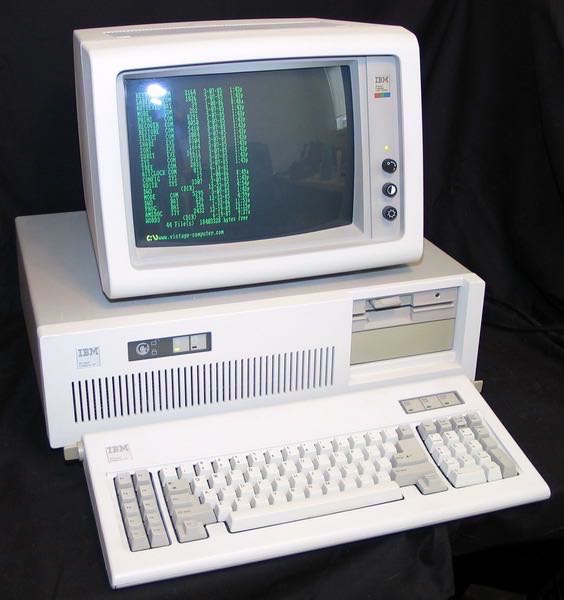
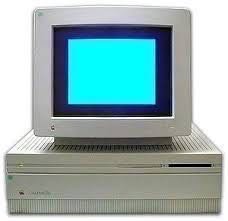
This positioning continued when John Sculley became the sole leader of Apple, after Steve left – except Sculley replaced Steve in lore.
Sculley was promoted by Apple PR as a fantastic leader. Many, at the time, told me they wanted to grow up and be just like John Sculley. That was how persuasive Apple’s PR was, and is still today.
That is how powerful PR is, and sometimes those who are being promoted start believing their own PR.
They believed the myth of John Sculley, even
though, as Hartmut Esslinger describes in his book, Keep It Simple: The Early
Design Years of Apple[i], that Sculley did not want innovative
product design (which was a bit unusual since he had a degree as an architect).
Scully just wanted computers that looked like IBM’s PCs. The result was Apple’s
Snow White design language that Steve strongly promoted was dropped, its
Macintoshes started to take on the look of the IBM PC, and the company began to
swirl into potential oblivion.
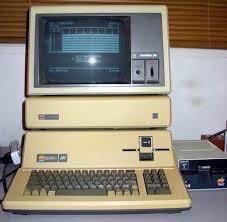
I inherited the Apple /// after three previous product managers. Steve was its first product manager, and in fact his first patent was the Apple /// all aluminum case, used as a heat sink so there would not be any disturbing noise from a fan. He saw that it was a product to fix the problems of the Apple //, such as:
- No key on the keyboard to capitalize the first letter of a sentence
- Memory that could not be more than 64K
- Mass storage of no more than 143K
These were severe limitations that would keep “the most personal computer” in just the home, entertainment, and educational market. Those limits tended to keep it out of the much larger business market, which required those capabilities so businesses could do word processing, graphics, databases, accounting, etc. Steve’s vision came from an astute ability to observe human behavior and “think out of the box,” by not allowing the existing prejudices of “we only do it this way” to block him from doing it in a new, faster, better way, with design and style. He could project into the future what that future might be and what products would fit. His major problem, in the early years, was that he couldn’t or wouldn’t consider the state of the market at the present, which led to some major mistakes.

David on Building Great Products, AI and Tech Shifts
By David Fradin |

Untold Stories From the Early Days of Apple Computer
By David Fradin |

Product Success Issues: Uses of Artificial Intelligence in Product Success Management
By David Fradin |
