

Information Gathering Techniques: Market Research

These are called primary research. Secondary market research is information from studies done by other organizations such as the government, associations and market research firms. Secondary research may or may not be accurate or be focused enough on your product. For example, an organization may be able to say how much money is being spent and by geography, but it is not specific enough to use for your product.
I made that mistake at least once. I had cell phone games with in-game advertisements developed for Nokia phones because Nokia said they had the largest cell phone market share in the world. After the game was developed and released, I learned that Nokia had only two cell phone models on the market in the United States. Most were in Europe and Asia. But my advertising sales channel extended only to U.S. advertisers. I had a user/buyer and channels mismatch and I failed. But that secondary market research was cheap, as is all secondary market research. Observations are simply watching. From what you observe, you can then craft a series of questions to ask of your target customer, either in person or over the phone or Internet. From the interviews, you can then refine your questions into a survey.
Analytics is emerging in the field of “big data” as a new way to find out what people do, but it has issues. For example, who knew before it was discovered that if a grocery store put beer next to the diapers, sales of beer would go up! There are correlations in big data that sometimes make no sense at all. While it may be the wisdom of the crowds, it is also subject to the mob effect.
The primary way to gain information is to simply observe. Procter and Gamble uses this technique because they say that people seldom know what they want and also can’t express it. Here is how to do it.
Planning to observe

Select the candidates you plan to observe based upon your target criteria. For example, if you plan to go after people who are likely to purchase cars, then be sure to pick those people who like cars. For selecting who to observe and later who to interview and survey, pick people with your target demographics, firmographics and ethnographics in mind.
Interview Questions
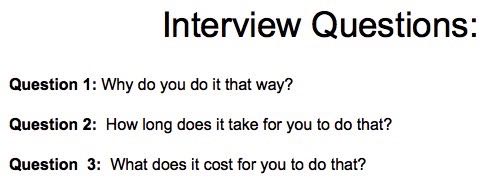
Your interview questions should focus on the what, how, when, where, who, blocking questions, importance, and satisfaction level with their current solution. In addition, you should ask for demographic, firmographic and ethnographic information so you can organize and classify. Some of your questions for the user, buyer, and influencer will be different. For example, you don’t want to annoy a user with questions about how much money they can spend, or buyers about what features they desire
Survey Representative Sample
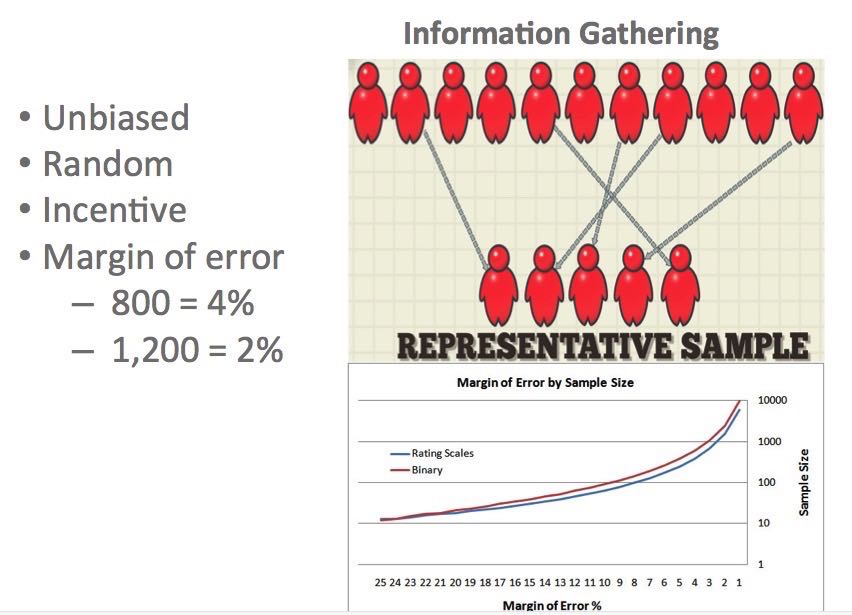
Now that you have observed and interviewed, the next step in market research is to a representative sample of your target market segments and conduct a survey. The survey results can then be extrapolated to the market segment as a whole. Use the responses and results from the interviews to refine your questions by doing such things as rewording to eliminate any bias that the questions might cause.
Analytics

Wikipedia defines analytics “as the discovery and communication of meaningful patterns in data.” It is especially valuable in areas rich with recorded information. Analytics rely on the simultaneous application of statistics, computer programming and operations research to quantify performance. Analytics often use “data visualization” to communicate insight.
One interesting way to do this is to research keywords used in web searches to identify the words people are using to find solutions to their problems (to the things they want to do). You will also use them later for your search engine optimization when doing your social media marketing.

David on Building Great Products, AI and Tech Shifts
By David Fradin |

Untold Stories From the Early Days of Apple Computer
By David Fradin |

Product Success Issues: Uses of Artificial Intelligence in Product Success Management
By David Fradin |
