


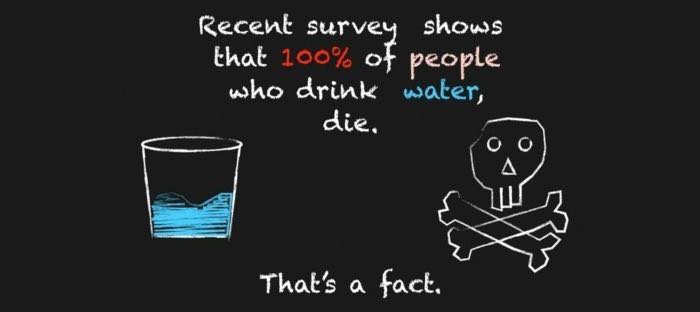
Courtesy of: blueboxresearch.com
It is important in doing market research to NOT make the traditional mistakes, or the intelligence gathered will not be of much use. The typical mistakes include:
1.1 Ad Hoc: done at the last minute, such as trying to determine the price of the product
1.2. Seller Perspective rather than the buyer’s: research done from the seller’s perspective of the market. If that perspective is right, then the research might help. But if the perspective is incorrect, the results of the research will be suspect. This happens in sales-driven companies.
1.3. Research held close at hand: many departments need access to the market research that has been conducted in order to do their job.
1.4. Not done in a timely fashion: frequently, departments request their central market research organization to do a study, but since it was not budgeted for in that year, the research can’t be done and completed for another 18 months. This is far beyond when the information would be useful, and results in doing “seat of the pants” decision-making, because the research that was needed is not available.
1.5. Doing the research by not understanding what the people being interviewed will get out of participating: simply saying “take my survey” will not give you the projectable results you will need, and neither will offering a gift to be given away at a raffle. Those agreeing to take the survey may be only interested in the prize, not your product.
1.6. Asking irrelevant questions: this might cause the person being surveyed to not finish the survey.
1.7. Having too many, detailed questions: such asasking the person to rank something on a scale of one to ten across dozens of characteristics.
1.8. Using polls, quizzes and surveys as a way to generate leads: those who do respond out of the goodness of their hearts will quickly discover you tricked them into wasting their time, which is not the way to build a positive brand image or affinity.
2. If you just ask three questions, you will frequently learn everything you need from the user type:
2.1. What do you like?
2.2. What do you not like?
2.3. Any comments/suggestions?
3. While it will be more time consuming to categorize open-ended questions, they do help discover things you may never have thought about.

David on Building Great Products, AI and Tech Shifts
By David Fradin |

Untold Stories From the Early Days of Apple Computer
By David Fradin |

Product Success Issues: Uses of Artificial Intelligence in Product Success Management
By David Fradin |

TESTIMONIALS

"I have done the marketing plan and got a great score from my working company. Thanks for your course and coaching."
Hsitang L
Student
"Very interesting course on the effective use of Social media in marketing. Must for all the Product Marketing managers. Simple & effective delivery of content. Thanks, Professor David."
Karthik S
Student
"Excellent Course for Marketing Strategy. It was comprehensive, easy to follow, and had the perfect balance of hands-on activities and lectures that left me with a full marketing strategy and implementation plan at the end of the course. Great course for anyone starting from scratch."
Spencer J.
Student
"David’s key Product Management and presentations skills were key to my success in starting up and building Apple Pacific in the early 80s."
Sami A
Client
"David continues to be a valued resource for general marketing expertise, industry knowledge, and product marketing know-how. We reference his clear insights regularly."
Peter M
Client
"David has been an excellent coach and mentor. Very detail oriented and practical in his approach. His ideas and frameworks are simple, practical and easy to understand and adopt, being extremely effective at the same time. The concept of ‘Do, value proposition’ is one such excellent framework which not only helps in formulating compelling value proposition for the customers but is also a source of ideas for new product innovation."
Manish B.
Student
"David is a very experienced and talented business professional. I have witnessed this first hand, as has demonstrated his ability across multiple disciplines, including market analysis, segmentation, customer profiling, competitive reviews, product management, marketing and sales strategy development and execution, to name but a few. In addition, he has great communication skills."
Mike B, Lead Generation Consultant
Client
"I met Dave through a consulting engagement while I was at YouSendIt. It was easily the single most useful and insightful consulting engagement I’ve experienced in my career. From his analysis of our industry to the product recommendations, Dave gave us actionable information that made YouSendIt a better company."
Chris B. (YouSendIt)
Client
"Building Insanely Great Products" is a great Segway into the product management space and contains insightful and practical advice which I am now going to validate with some of the projects I am working on"