


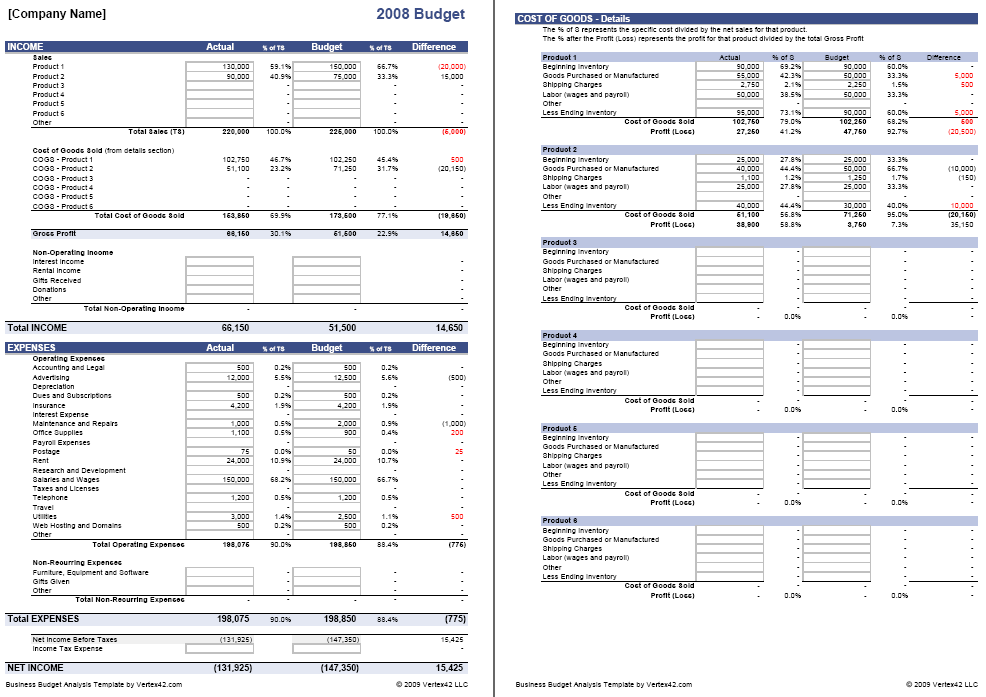
Product stakeholders, in all functions, will need financial investments to implement initiatives for their respective functions. To do this planning for the next calendar or fiscal year, all stakeholders do budget plans.
We could consider budgets as ‘spending maps’ that link near-term product strategy to its business operations. Typically, spending estimates are prepared for each function of the product company, such as marketing, sales, development, testing, support, IT, quality, HR, finance, partner development, geographic office operations, and others — and then rolled-up for the product, the entire product line, and perhaps the portfolio.
The budget goes through affordability and achievability reviews by the company management. Each of the functions may make suitable changes after management review. Those changes tell the teams the availability of funding. It is also the responsibility of the individual functions to track variances between plan and actuals as the plan is executed.
Budget deviations will reflect poorly on the managers involved, suggesting they have poor planning ability. This is due to the fact that organizational-level management looks at cash flow as well as profitability of products in the product line. Budgetary control refers to the process established in the company to plan and track variances of different budget items together with reasons for deviation.
Those responsible for the success of their products are required to ensure that the product line is achieving its stated business objectives as stated in the product plan, strategy, business case and budget.
The achievements are typically related to the achievement of launch schedule, size and growth of the customer base, direct revenues, service revenues, and partner or channel sales.
A budget helps with the negotiation of your contribution with your manager and to communicate with the team, in order to set expectations of business achievements for the plan period.
Having good budgetary disciplines, in the functions, enable functions to:
- Effectively “communicate” the goals and resources available
- Facilitate cost reductions
- Optimize spending on key initiatives
- Identify inefficiencies and take corrective action
- Optimize resource utilization
- Align strategic objectives and enable key drivers of business results
Thus, a major key to success is the ability to budget accurately, control expenses, and achieve the expected return on investment.
Metrics
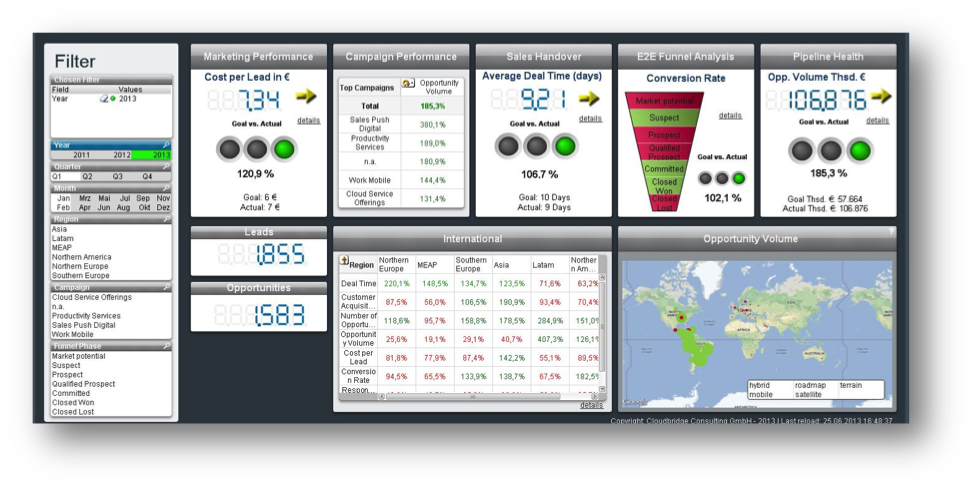
A very important key to long-term success is to be sure to pick the metrics against which one wishes to define success. If the wrong metric is picked, it could lead to some very undesirable outcomes.
For example, if one is comparing the effectiveness of two market channels on units sold, which is the wrong metric, instead of profits generated, which the correct metric.
Here is why.
The variable costs associated with direct sales (salaries for sales engineers, car expenses, entertainment, etc.) are much higher than the ones associated with online sales. Comparing channels on units sold might give the impression that the direct channel is the way to go and the place to invest. But in reality, many retailers are now recognizing that the online channel might be a much more profitable and far-reaching channel.
Of course, it very much depends on the TYPE of products being sold. If one is selling high-end chemical process engineering systems, then direct sales is the way. But if one is selling digital cameras, then most likely the best channel will be Amazon.
When I was at DataQuest in 1985, we commissioned a study and found that a company could not sell products direct using a direct sales force if the product sold for less than $12,000. Today, it is probably a lot closer to $27,000. The cost is fairly easy to figure out with a profit and loss statement for each channel.
Steve Johnson calls the $10,000 to $50,000 range the “dead zone of pricing.” It’s too expensive to sell indirect and too cheap to sell direct.
So, the first key thing to do is to identify key data that maps to metrics from:
- Sales
- Marketing
- Operations
- Service and Support
Then ask:
- How will it get analyzed?
- What reports will be produced, and when?
- Who will pull the data, when will it be pulled, and what is the criteria for pulling it?
The key question to ask is: what are the key metrics that will enable you to validate that your strategy is working and that you are achieving the goals, results and business outcomes upon which you sold the product market strategy plan?
In today’s always on, digital world, it is possible to track a lot of what is going on in the customer’s journey in real time.
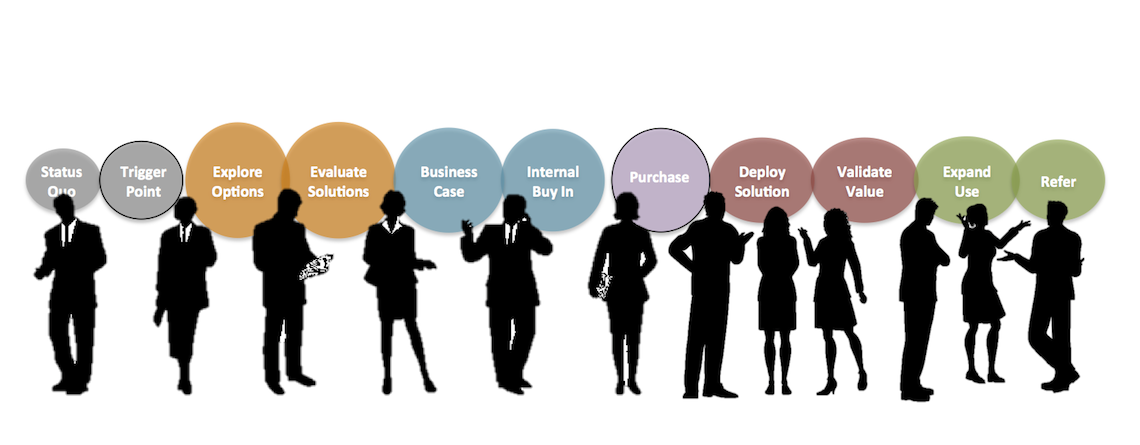
So why not lay out metrics at each stage of the customer journey so you know how many prospects you are touching at each stage, where they are dropping out of the journey, and who is being converted to sales? It’s very similar to the theory of the “sales funnel,” where only a certain percentage get converted. In the case of metrics for each step of the customer journey, you will know exactly what is working, why it is working, and what is not working.

David on Building Great Products, AI and Tech Shifts
By David Fradin |

Untold Stories From the Early Days of Apple Computer
By David Fradin |

Product Success Issues: Uses of Artificial Intelligence in Product Success Management
By David Fradin |

TESTIMONIALS

"I have done the marketing plan and got a great score from my working company. Thanks for your course and coaching."
Hsitang L
Student
"Very interesting course on the effective use of Social media in marketing. Must for all the Product Marketing managers. Simple & effective delivery of content. Thanks, Professor David."
Karthik S
Student
"Excellent Course for Marketing Strategy. It was comprehensive, easy to follow, and had the perfect balance of hands-on activities and lectures that left me with a full marketing strategy and implementation plan at the end of the course. Great course for anyone starting from scratch."
Spencer J.
Student
"David’s key Product Management and presentations skills were key to my success in starting up and building Apple Pacific in the early 80s."
Sami A
Client
"David continues to be a valued resource for general marketing expertise, industry knowledge, and product marketing know-how. We reference his clear insights regularly."
Peter M
Client
"David has been an excellent coach and mentor. Very detail oriented and practical in his approach. His ideas and frameworks are simple, practical and easy to understand and adopt, being extremely effective at the same time. The concept of ‘Do, value proposition’ is one such excellent framework which not only helps in formulating compelling value proposition for the customers but is also a source of ideas for new product innovation."
Manish B.
Student
"David is a very experienced and talented business professional. I have witnessed this first hand, as has demonstrated his ability across multiple disciplines, including market analysis, segmentation, customer profiling, competitive reviews, product management, marketing and sales strategy development and execution, to name but a few. In addition, he has great communication skills."
Mike B, Lead Generation Consultant
Client
"I met Dave through a consulting engagement while I was at YouSendIt. It was easily the single most useful and insightful consulting engagement I’ve experienced in my career. From his analysis of our industry to the product recommendations, Dave gave us actionable information that made YouSendIt a better company."
Chris B. (YouSendIt)
Client
"Building Insanely Great Products" is a great Segway into the product management space and contains insightful and practical advice which I am now going to validate with some of the projects I am working on"