


What is a market segment?
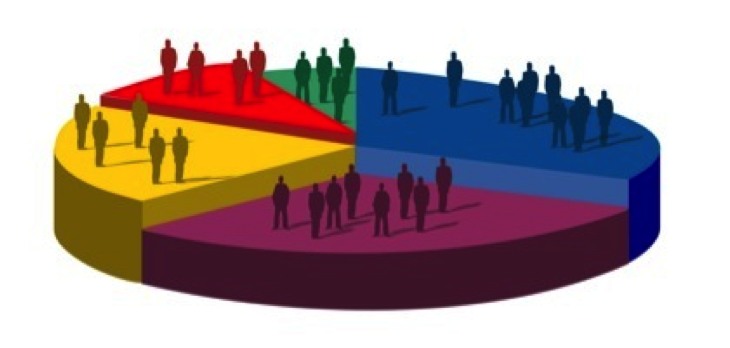
A market segment is an addressable market that has common needs and characteristics that can be monetized. Just because you have identified a market segment, does not mean you will be able to market and sell to it effectively.
A market segment could be quite dynamic and changing, but by using big data (if you have it available), you might be able to reach it and track it.
In order to pick a target market segment, you need to know how big it is, what are its unique characteristics, and how are you going to create awareness or promote your product or service to it. You also need to understand exactly what problems/needs they are looking for that your product can address. Defining it through demographics, firmographics and ethnographics (how people live their lives) is helpful, too.
To get started, you need to first develop persona statements about individuals within that common target market segment. Next, you will need to position your product in that market segment, and figure out the messaging.
Another thing to keep in mind is how to optimize your return on investment in that market segment, versus other market segments that may present more lucrative opportunities. Also, you need to understand what the key drivers are within that particular segment. It is important to recognize each market segment, which could be quite dynamic.
You also need to consider the concept of portfolio management for market segments. You will want some established market segments targeted by some of the products in your product portfolio. Other products could: (1) be targeting new and developing market segments; (2) be cash cows; and/or (3) be phased out. A balanced product portfolio will smooth revenue and manufacturing peaks and valleys.
Identifying your customer segments

You can’t sustain fast effective innovation that creates value for customers and accelerates your growth unless you know who your customers are, what creates value for them, and what your current and future customers really want to do.
Steve Johnson says, “I’m amazed how often I hear, ‘We’ve finished the product. Now where can we find customers?’” Ugh.
The innovation planning process must anticipate potential business arenas, and the associated areas of potential innovation, based upon who your customer is. At this point, you must allocate resources to go after the segments you have defined.
If the areas of opportunity you have identified are wrong, then you will waste time and energy, as opposed to building market momentum. Segmentation is a process that identifies customer clusters with unique needs and behavioral characteristics that align with your company’s values, vision, and strategy. This segmentation process should be ongoing within your company.
Customer Segments are Unique
Every customer segment by definition is unique, and the value of each customer segment to your company varies.
For this reason, it makes sense to segment them, beginning with these criteria:
- Desired Outcomes
- Value to you
- How well customers in that segment are satisfied, and will they consider alternatives?
Actionable B2B Segmentation Attributes
These are some of the questions you can ask to determine your business-to-business market segmentation attributes:
- What business are they in, and where are they located?
- What are their customers’ desired outcomes?
- Can your marketing, distribution and salesforces have experience with that segment, and can they reach them?
- What is their value creation process for their customer? Does your product and company fit into that value creation process?
- What are their business goals, and how do they measure achievement?
- What problems/opportunities are they trying to address that you can help them with?
- How are the relevant elements of the perfect storm likely to impact them?
- What is their stance/strategy for innovation?
- Who are the stakeholders in their innovation process?
- How does your offer create value for them?
- What relevant initiatives are they undertaking?
- What drives their purchasing decisions?
- What is their buying process, and how do they undertake it?
- Who are the stakeholders in their buying process?
Defining Your Market Segments
A key segmentation criteria is the value the segment places on innovation.
Segmentation will also enable you to identify new and unmet needs. You can also personify segments by including information on where those personas go to gather insight on the business drivers that are reshaping their industry. This will be helpful when you start putting together the social media and marketing plans. Additionally, you need to learn what the impact of rapid change is having on them and their customers, and where they’re turning to gather insight, information and partners for their innovation processes. You will be able to gather this information by conducting interviews and surveys. Customer segmentation is a critical component of this planning process. Without a clear understanding of “who” your target customers are, and the value that you are trying to create for them, it will be impossible to focus on the right innovation priorities for each market segment.
Target Market
The target market is within a market segment. The bullseye for the target market contains three layers of “who,” “where,” and “why.” The sweet spot is the center that combines all three. Let’s look at the layers one at a time.
Bullseye: Who are they?
“Who” is the description of a specific individual (or group of individuals) within a type of company or organization. Identifying individual responsibilities in addition to applicable titles. In a business to consumer sale, the who is the user and the buyer.

Bullseye: Where do they work?
The “where” layer of the bullseye is the next logical dimension. Specifically, do these prospects know who we are? Are they currently customers of ours? Or do they not know us? This is where we also consider company size, geography, their history, other demographics, firmographics, and ethnographics.
Bulleye: Why are they a good target for us?
Why do these individuals and/or companies represent an ideal segment?
To answer this, we need to know a bit about how they think. We need to know their psychographics:
- What predispositions do they have as to why they make purchase decisions, or how they will use our product?
- Where are they on the market adoption cycle from Innovators to Laggards?
- What are their preferences?
- Are they already aware of alternative solutions, or do they need to be educated?
- Where are they in their buying process? Are they at the very beginning, in the middle, or at the end of their customer journey, and about to make a purchase decision?
Market Sizing

You can size your market based upon such things as:
- How many people have the same thing to do.
- How frequently their “do” is done, and what is their satisfaction level with the current solution.
- How much time and money they spend getting the “do” done. This will be critical later in order to compute a Return on Investment that your customer will obtain with your solution. Providing this information to the customer can be quite helpful in the sales process.
- What they might be willing to spend. Suppose it’s a $100 problem; then you know to price the product somewhere around that area. You can ask in your interviews if they would be willing to spend up to a certain amount, assuming, of course, your solution can and will really deliver cost or time savings.
- How much time they spend on that “do” will give you a feel for their sense of urgency. If they are spending a considerable amount of time, then they will really want to get your product right away. That sense of urgency will help you forecast the sales cycle and sales volume.
In summary, use primary market research to find:
- How many people have the same “dos?”
- How frequently do they do that “do?”
- How satisfied with current solutions?
- What resources and how much time and money do they spend getting that “do” done?
- What are they willing to spend?
- How much time do they do that “do?”
This information also helps write the target persona to be used for product development and marketing. In addition, the resulting personas can are aggregated into market segments and target markets.

David on Building Great Products, AI and Tech Shifts
By David Fradin |

Untold Stories From the Early Days of Apple Computer
By David Fradin |

Product Success Issues: Uses of Artificial Intelligence in Product Success Management
By David Fradin |

TESTIMONIALS

"I have done the marketing plan and got a great score from my working company. Thanks for your course and coaching."
Hsitang L
Student
"Very interesting course on the effective use of Social media in marketing. Must for all the Product Marketing managers. Simple & effective delivery of content. Thanks, Professor David."
Karthik S
Student
"Excellent Course for Marketing Strategy. It was comprehensive, easy to follow, and had the perfect balance of hands-on activities and lectures that left me with a full marketing strategy and implementation plan at the end of the course. Great course for anyone starting from scratch."
Spencer J.
Student
"David’s key Product Management and presentations skills were key to my success in starting up and building Apple Pacific in the early 80s."
Sami A
Client
"David continues to be a valued resource for general marketing expertise, industry knowledge, and product marketing know-how. We reference his clear insights regularly."
Peter M
Client
"David has been an excellent coach and mentor. Very detail oriented and practical in his approach. His ideas and frameworks are simple, practical and easy to understand and adopt, being extremely effective at the same time. The concept of ‘Do, value proposition’ is one such excellent framework which not only helps in formulating compelling value proposition for the customers but is also a source of ideas for new product innovation."
Manish B.
Student
"David is a very experienced and talented business professional. I have witnessed this first hand, as has demonstrated his ability across multiple disciplines, including market analysis, segmentation, customer profiling, competitive reviews, product management, marketing and sales strategy development and execution, to name but a few. In addition, he has great communication skills."
Mike B, Lead Generation Consultant
Client
"I met Dave through a consulting engagement while I was at YouSendIt. It was easily the single most useful and insightful consulting engagement I’ve experienced in my career. From his analysis of our industry to the product recommendations, Dave gave us actionable information that made YouSendIt a better company."
Chris B. (YouSendIt)
Client
"Building Insanely Great Products" is a great Segway into the product management space and contains insightful and practical advice which I am now going to validate with some of the projects I am working on"