


The world, according to Battelle, a nonprofit research organization, spent about $1.6 trillion on research and development in 2014.
Each year, Battelle and R&D Magazine reports on their “annual forecast of global research and development funding, which is a public service for use by policy makers, corporate research leaders, researchers, educators, and economists.”
They claim that research and innovation “contribute in the short and long terms to prosperity and competitiveness, as well as to the resolution of society’s greatest challenges in areas like health, energy, and security.”
But not all of those expenditures translate into “prosperity,” since approximately 40% of those products and services fail in the marketplace. So the question becomes: What are the reasons for product failures, and what key things can be done to reduce the rate of failure? If the rate of failure can be reduced, then that waste can be reduced with those resources being used elsewhere. Failure reduction will also increase the productivity of research and development.
Global R&D Forecast
About 60% of products succeed which means about 40% fail.
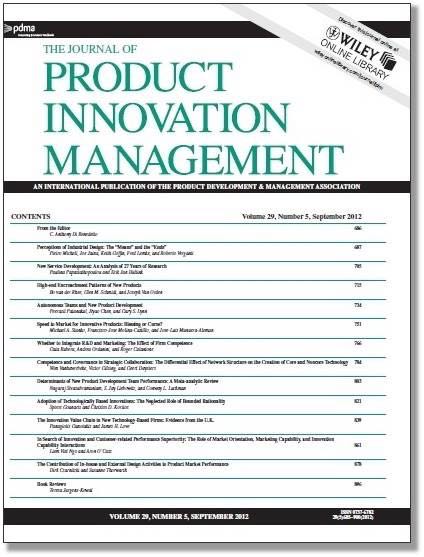
George Castellion of SSC Associates and Stephen K. Markham of North Carolina State University discuss this in their paper: “Myths About New Product Failure Rates: New Product Failure Rates: Influence of Argumentum ad Populum and Self-Interest.”
As a result, our world wastes over $640 billion a year in resources on failed products. That $.64 trillion was spent on development, thus those who spent that did not get a return on their investment.
Even if we could do just a little better, the increase in productivity would result in billions of additional resources, which would significantly improve the world’s economy. I would suggest that improvement could conceivably add to the cycle of money passing through the economy. This would amount to close to half of the entire U.S. government budget. Such highly productive churn will have a measurable impact on improving society because successful products can enhance lives, create jobs and waste less — thus also helping the environment.
Imagine if we could use the same techniques that reduced airplane accidents to reduce the level of product failure! Those techniques and processes in terms of building insanely great products are discussed in this book.
In the same way Steve Jobs built a company (with a ton of help from many others) that changed the world, imagine if other companies and organizations can also do the things Apple does well, too. That shall also truly change the world, and help many more beyond those who purchase Apple’s products.
What Steve, Tim Cook, Phil Schilling, Jony Ive, and their teams did to build an insanely great company after Steve’s return in the late 90s, are detailed here too.
My studies have found that product failures tend to fall into six general areas. I will give you a high-level overview of the six essential keys to averting failure and enhancing the chances of product success. The Six Keys to Building Insanely Great Products — You won’t learn in MBA School

Product success is first based on building a company or organization that can be successful, then understanding the customer, innovation, a market strategy for the product and then the hard part — the implementation: marketing, sales, service, support and operations.
The combination of a company’s values/vision, processes, employees and systems/tools is what builds the company. One needs a strategy, information about the development and implementation of that strategy, plus a clear understanding of what their customers want to “do.”
The six keys to product success are:
- Strategy
- Process
- Information
- Customers
- Employees
- Systems and Tools
Or a good mnemonic is SPICES.
“Success is a side effect of doing the right things in the right time”
– Andre Hawit

David on Building Great Products, AI and Tech Shifts
By David Fradin |

Untold Stories From the Early Days of Apple Computer
By David Fradin |

Product Success Issues: Uses of Artificial Intelligence in Product Success Management
By David Fradin |

TESTIMONIALS

"I have done the marketing plan and got a great score from my working company. Thanks for your course and coaching."
Hsitang L
Student
"Very interesting course on the effective use of Social media in marketing. Must for all the Product Marketing managers. Simple & effective delivery of content. Thanks, Professor David."
Karthik S
Student
"Excellent Course for Marketing Strategy. It was comprehensive, easy to follow, and had the perfect balance of hands-on activities and lectures that left me with a full marketing strategy and implementation plan at the end of the course. Great course for anyone starting from scratch."
Spencer J.
Student
"David’s key Product Management and presentations skills were key to my success in starting up and building Apple Pacific in the early 80s."
Sami A
Client
"David continues to be a valued resource for general marketing expertise, industry knowledge, and product marketing know-how. We reference his clear insights regularly."
Peter M
Client
"David has been an excellent coach and mentor. Very detail oriented and practical in his approach. His ideas and frameworks are simple, practical and easy to understand and adopt, being extremely effective at the same time. The concept of ‘Do, value proposition’ is one such excellent framework which not only helps in formulating compelling value proposition for the customers but is also a source of ideas for new product innovation."
Manish B.
Student
"David is a very experienced and talented business professional. I have witnessed this first hand, as has demonstrated his ability across multiple disciplines, including market analysis, segmentation, customer profiling, competitive reviews, product management, marketing and sales strategy development and execution, to name but a few. In addition, he has great communication skills."
Mike B, Lead Generation Consultant
Client
"I met Dave through a consulting engagement while I was at YouSendIt. It was easily the single most useful and insightful consulting engagement I’ve experienced in my career. From his analysis of our industry to the product recommendations, Dave gave us actionable information that made YouSendIt a better company."
Chris B. (YouSendIt)
Client
"Building Insanely Great Products" is a great Segway into the product management space and contains insightful and practical advice which I am now going to validate with some of the projects I am working on"